Vibe Coding Works. Vibe Shipping Doesn't.
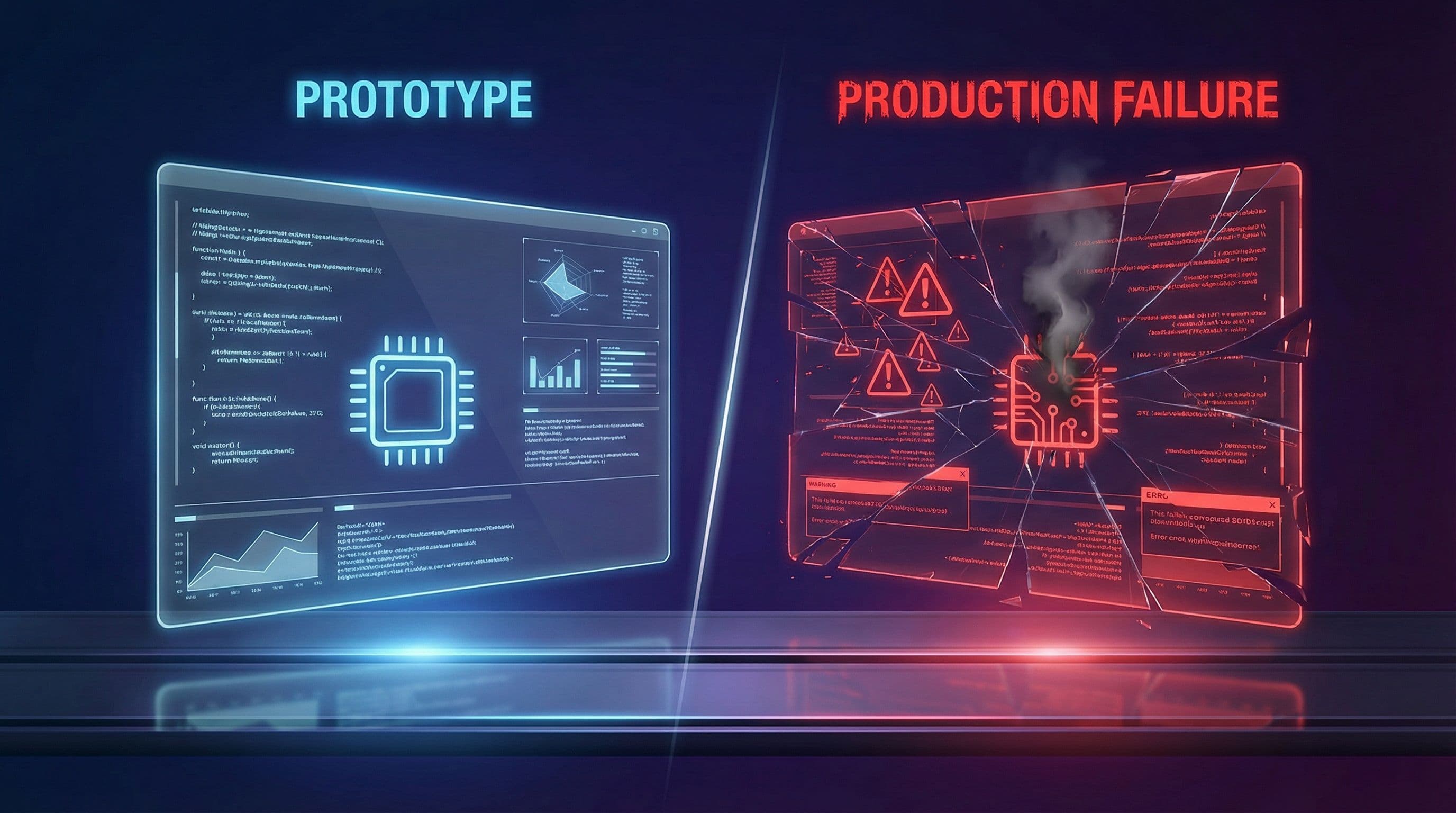
Your AI-generated prototype works perfectly. The demo blew everyone away. Product loved it, stakeholders are excited, and you built it in an afternoon instead of a week.
Now try shipping it.
Edge cases start failing. Security was an afterthought. And when someone asks you to explain how the authentication flow works in standup, you realize you can't. You didn't write it. You vibed it into existence.
Welcome to the vibe coding hangover.
The Vibe Coding Revolution: From MIT Breakthrough to Production Reality
MIT Technology Review just named generative coding one of their 10 Breakthrough Technologies for 2026. That's a real signal that the way software gets built is changing.
Tools like Lovable and Replit have made impressive demos trivial. You describe what you want, the AI generates it, and suddenly you've got a working prototype that would've taken your team days to build. The speed is intoxicating, and the results are often genuinely impressive.
What the breakthrough coverage skips over is the gap between "works in demo" and "survives production." That gap is full of security vulnerabilities, unhandled edge cases, and code that nobody on your team actually understands.
Simon Willison put it bluntly: "Vibe coding your way to a production codebase is clearly risky." He's right, and we're watching teams discover it the hard way.
Why Your AI Prototype Fails in Production: The Hidden Costs of Vibe Shipping
The problem isn't that AI-generated code doesn't work. It's that it works just enough to be dangerous.
An engineer on Reddit's r/cscareerquestions shared their story of getting sacked for shipping code they couldn't explain. They'd used AI to meet a tight deadline, the feature worked, and they pushed it to production. When a bug appeared and the team asked them to walk through the logic, they couldn't. They hadn't implemented it. They'd prompted it.
That's not an edge case. That's vibe coding colliding with reality.
The code AI generates tends to handle the happy path beautifully. It's optimized for the most common scenarios because that's what its training data emphasized. But production is more than happy paths. It's malformed inputs, race conditions, network failures, and users doing things you never imagined.
AI doesn't think about those scenarios unless you explicitly prompt for them. And if you don't know enough to prompt for them, they don't exist in your codebase until they cause an outage.
The Security Blind Spot: 24.7% of AI Code Contains Vulnerabilities
The stat that should make every engineering leader nervous: roughly 24.7% of AI-generated code contains security flaws as of early 2026.
That's about one in four code snippets your AI assistant generates carrying a vulnerability. Not a style issue or a performance problem, an actual security flaw.
The newer models are better. Claude 4 and GPT-5 have improved logic and reasoning. But they're still probabilistic systems. They're predicting the most likely next token based on patterns in their training data, not reasoning about security from first principles.
A Georgetown University study looking at MITRE's Top 25 Common Weakness Enumeration list found that AI systems consistently generate code with dangerous patterns: SQL injection vulnerabilities, buffer overflows, improper authentication checks. These aren't obscure bugs. They're the most common and exploitable weaknesses in software.
Vibe coding, as Kissflow noted, "lacks built-in security, governance, compliance controls." The AI isn't thinking about your company's security standards or compliance requirements. It's thinking about what code looks most plausible based on its training.
Veracode's research shows that 62% of AI-generated code contains known vulnerabilities. When you're vibing your way through a feature, you're gambling with your security posture.
The vulnerabilities often aren't obvious, either. The code looks clean. It passes basic testing. Then six months later you're dealing with a breach because nobody caught the authentication bypass that the AI confidently generated.
Building Quality Gates: How Winning Teams Ship AI-Generated Code
So should you ban AI coding tools? No.
The teams winning right now aren't avoiding AI. They're building quality gates that turn vibe code into production code.
Treat vibe coding as the thing that gets you 80% of the way there, fast. The remaining 20% is where experienced developers earn their keep: the review, the hardening, the security audit, and a real understanding of what the code actually does.
Here's what effective quality gates look like.
Static Analysis as a Non-Negotiable
Integrate Static Application Security Testing (SAST) directly into your development workflow. Don't wait until PR review. Scan AI-generated code before it even gets committed. Tools that understand common vulnerability patterns can catch the obvious stuff automatically.
Mandatory Code Review with Context
Not just "does this work?" review. Your reviewers need to understand the implementation deeply enough to maintain it. If the person who prompted the AI can't explain the approach during review, it doesn't ship. Period.
One team I know has a simple rule: you must be able to whiteboard the core logic of any AI-generated code before it merges. It seems harsh, but it forces actual understanding.
Security Review for Anything Customer-Facing
If AI generated code that touches user data, authentication, or external APIs, a security-focused developer reviews it separately. They aren't looking for bugs. They're threat modeling.
Comprehensive Test Coverage
AI is great at generating happy path code. You're responsible for the unhappy paths. Before shipping, you need tests for error conditions, edge cases, and failure modes. If the AI didn't think of it, your tests need to catch it.
Documentation Requirements
This sounds boring, but it's critical. Require actual documentation of what the code does and why architectural decisions were made. AI-generated code often lacks comments or has generic ones. Make humans add the context.
The SaaStr analysis put it well: "Vibe coding isn't threatening enterprise software core ... yet." That "yet" is carrying a lot of weight. It's not threatening enterprise software because enterprise teams already have these quality gates. They're just adapting them for AI-generated code.
The HyperDev Approach: Human Review as Your Production Safety Net
At Point Dynamics, we've been working through this with HyperDev. The approach is straightforward: vibe coding gets you velocity, experienced developers get you quality.
Every AI-generated change gets reviewed by someone who's shipped production code before. Not a rubber stamp, an actual technical review by someone who understands the difference between "works in the demo" and "works in production."
The AI handles the tedious parts. Writing boilerplate. Generating initial implementations. Scaffolding out tests. But humans make the judgment calls:
- Is this approach actually maintainable?
- What happens when this API is unavailable?
- Did we handle the authentication edge cases?
- Will this scale beyond the demo dataset?
- What's the security model here?
We're not slowing development back down to pre-AI speeds. We use AI to clear out the grunt work, which frees up experienced developers for the parts that actually require judgment and expertise.
The value isn't the AI. It's the human review layer that keeps vibe-coded prototypes from becoming production disasters.
The Vibe Coding Hangover Is Real
AI coding tools are genuinely useful. The productivity gains are real. Prototyping quickly is a big deal. MIT didn't name this a breakthrough technology on hype alone.
But new tools don't mean abandoning discipline. They mean adapting your discipline to the tools.
Vibe coding works brilliantly for what it's designed to do: rapid prototyping, exploration, and getting to that first 80% quickly. It's a powerful tool in the hands of developers who understand its limits.
Vibe shipping, treating AI-generated code as production-ready by default, is where teams get burned. That's where the security vulnerabilities slip through. That's where unmaintainable code piles up. That's where engineers get fired for shipping code they don't understand.
The teams that come out ahead in 2026 and beyond won't be the ones that avoid AI, and they won't be the ones that ship everything the AI generates. They'll be the ones who find the right balance: AI for velocity, plus the quality gates that separate demos from production systems.
Your AI can vibe code. Your humans still have to ship it.
Because when that 3 AM page hits and production is down, "the AI wrote it" isn't going to cut it as an explanation.